Water Extraction in Rochester, MN
Standing water keeps moving into pad, subfloor and drywall. The extraction crew pulls it out with truck-mounted units first, so drying starts on materials that can still be saved.
(888) 432-4933Get Rochester water extraction started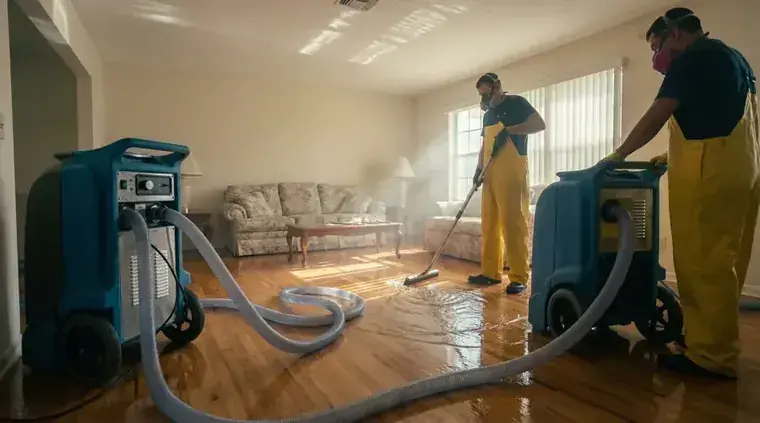
How water extraction is handled in Rochester, MN
- 01
Walkthrough
The tech who does the walkthrough maps every wet material with pinless meters and thermal imaging and sets the category and class of the loss.
- 02
Extraction
The extraction crew pulls standing water with truck-mounted units, lifts saturated pad and cuts only what the readings say is lost.
- 03
Drying
The drying team sizes air movers and LGR dehumidifiers to each room's evaporation load and logs psychrometric readings every day.
- 04
Verification
Equipment leaves when wet materials read within 2 to 4 points of a dry reference, which is the IICRC S500 goal, and the file is closed with photos and logs.
What does water extraction cost in Rochester, MN?
In Rochester, MN, water extraction on its own typically runs $400 to $2,500, depending on the water category, how many square feet are wet and how deep the water sits.
- Up to about 200 sq ft
- Carpet or hard floor
- Extraction plus a moisture map
- Carpet and pad throughout
- Truck-mounted extraction
- Pad lifted where needed
- Category 3 source
- Protective gear and containment
- Porous materials removed
What moves the number: water category, square footage, how deep the water sits, the flooring type and how long it has been wet. For a closer planning range, try the water damage cost calculator. These are typical ranges, not quotes.
What to do the moment you find standing water
- 1
Stop the source. Shut the main or the fixture valve so no new water enters.
- 2
Power off. Cut wet circuits only from a dry panel; never stand in water to reach it.
- 3
Move what floats. Lift boxes, rugs and furniture legs off the wet floor.
- 4
Call for extraction. The sooner the water is out, the more carpet and drywall can stay.
Extraction is the first move on every water loss in Rochester, whether the source is a split supply line on Pill Hill or a sump that quit in a Cascade Lake basement. Every gallon pulled out with a wand is a gallon the dehumidifiers never have to evaporate, which is why a good extraction pass shortens the whole dry-out.
Why truck-mounted extraction matters
A shop vacuum lifts the puddle. A truck-mounted unit pulls water out of carpet, pad and the top of the slab with far more suction, and it sends that water outside through a hose instead of into a tank that has to be carried through the house. On a finished basement that difference decides whether the carpet can be saved.
- Weighted extraction tools and stand-on wands squeeze water out of carpet and pad in place.
- Squeegee wands pull water off hardwood, vinyl and tile before it works into the seams.
- Portable extractors reach upper floors and tight Rochester stairwells where hoses cannot run.
What happens right after the water is out
The tech who does the walkthrough maps moisture with pinless meters and thermal imaging, because water that looks gone is often sitting under the pad, behind baseboards or inside the bottom plate of the wall. That map decides where air movers go, how many LGR dehumidifiers the rooms need and whether any drywall has to be cut.
Category matters from the first minute. Clean water from a pipe can be extracted and dried in place. Water from a sewer backup or an outside flood is Category 3, and the porous materials it touched get removed, not dried. See sewer backup cleanup for how that is handled.
Extraction in Rochester homes
Many Rochester basements sit on bare concrete with carpet laid over pad, and water that spreads across that pad travels further than it looks. Older homes near downtown add plaster walls and hardwood on the main floor, which hold water longer and need careful extraction before drying equipment goes in. Newer lower levels around Kings Run and the northwest side often run one long room, so a single failed pump can wet a large area quickly.
Before the crew gets there, shut off the water and stay away from wet outlets. The Ready.gov flood safety page covers electrical safety around standing water, and the EPA mold page explains why wet materials need to dry within 24 to 48 hours. Once extraction is done, the structural drying phase takes over.
Standing water in a Rochester home right now?
(888) 432-4933Rochester water removal, 24/7Related water damage services in Rochester
Water Extraction across Rochester
The restoration team works all of Rochester, from Pill Hill and Kutzky Park to Northrop, Cascade Lake and Eastwood, plus Byron, Stewartville, Kasson, Pine Island and Oronoco.
Every neighborhood and ZIP coveredWater Extraction questions in Rochester, MN
Straight answers on water extraction in Rochester homes and buildings.
(888) 432-4933Water still moving? Call Rochester now.How soon should water extraction start?
As soon as possible. Water keeps wicking into pad, subfloor and drywall, and mold can start inside 24 to 48 hours. Early extraction is the single biggest factor in how much can be saved.
Can wet carpet be saved after extraction?
Often, if the water was clean and extraction started early. The pad is usually replaced because it soaks up water like a sponge. Carpet touched by sewage or floodwater is removed.
Is a shop vacuum enough?
For a small spill on a hard floor, maybe. For a wet basement it is not: a shop vacuum leaves most of the water in the pad and the slab, and that water keeps feeding moisture into the walls.
Does extraction dry the room?
No. Extraction removes the bulk water. Air movers and LGR dehumidifiers then dry the materials, with daily readings until the drying goal is met.
Can hardwood be extracted?
Yes. Squeegee wands and specialty drying mats pull water out of the boards and the subfloor. Hardwood takes longer to dry than carpet, and some cupping settles as it dries.
What does the extraction crew need to know on the call?
The source of the water, how many rooms or levels are wet, and whether the water came from a sewer drain or outside, because that sets the category and the gear.
Get the standing water out tonight.
The extraction crew brings truck-mounted units and a moisture meter to every Rochester loss.