Flood Cleanup in Rochester, MN
Floodwater from outside carries soil, fuel and sewage. The restoration team treats it as Category 3: extraction, removal of soaked materials, cleaning and drying to a measured goal.
(888) 432-4933Floodwater inside? Call the Rochester crew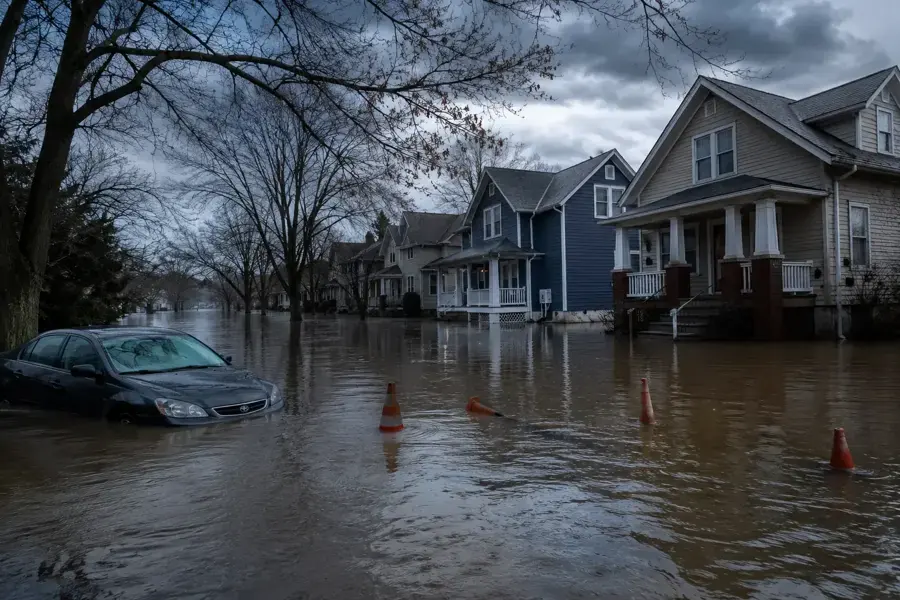
How flood cleanup is handled in Rochester, MN
- 01
Walkthrough
The tech who does the walkthrough maps every wet material with pinless meters and thermal imaging and sets the category and class of the loss.
- 02
Extraction
The extraction crew pulls standing water with truck-mounted units, lifts saturated pad and cuts only what the readings say is lost.
- 03
Drying
The drying team sizes air movers and LGR dehumidifiers to each room's evaporation load and logs psychrometric readings every day.
- 04
Verification
Equipment leaves when wet materials read within 2 to 4 points of a dry reference, which is the IICRC S500 goal, and the file is closed with photos and logs.
What does flood cleanup cost in Rochester, MN?
In Rochester, MN, flood cleanup typically runs $4,000 to $20,000 or more, depending on how deep the water got, how many rooms it reached and how much material must be removed and treated.
- Mud and water removal
- Cleaning and antimicrobial
- Concrete drying
- Flood cut above the high-water line
- All wet porous materials removed
- HEPA air scrubbing
- Main floor reached
- Framing and subfloor drying
- Extended equipment days
What moves the number: flood depth, square footage, number of levels, how long the water sat, the materials removed and how fast drying started. For a closer planning range, try the water damage cost calculator. These are typical ranges, not quotes.
What to do after floodwater gets inside
- 1
Stay out of the water. Floodwater can hide live wires, debris and sewage.
- 2
Leave the power off. Do not reset breakers in a flooded area.
- 3
Mark the high-water line. Photograph it on every wall before anything is removed.
- 4
Call when it is safe. Removal and cleaning start as soon as the water stops rising.
Rochester grew up along the South Fork of the Zumbro River, with Bear Creek, Cascade Creek, Willow Creek and Kings Run feeding it through town. The July 1978 flood that swept through downtown led to a flood control project that widened those channels, and big river floods are far rarer now. Flash flooding is not: a slow summer thunderstorm can still drop more rain than storm drains can carry, and low streets and walkout basements fill fast.
Why floodwater is Category 3
Water that comes in from outside has run across streets, yards and parking lots and often mixes with overflowing sewer water. The IICRC S500 standard treats it as Category 3, the same as sewage. That changes the whole job: porous materials the floodwater touched come out, and every remaining surface is cleaned and treated before drying starts.
How flood cleanup runs
- Safety first: power stays off in flooded areas until an electrician clears it.
- The extraction crew removes standing water and the mud it leaves behind.
- Carpet, pad, drywall and insulation below the flood line are removed, usually with a flood cut above the highest mark.
- Surfaces are cleaned and treated with an EPA-registered antimicrobial.
- Air movers, LGR dehumidifiers and HEPA air scrubbers run until readings reach the drying goal.
Photograph the high-water mark on the walls before anything is removed. Adjusters use it to measure the loss, and it disappears once drywall is cut.
Where flooding hits in Rochester
Low-lying blocks near the river and the creeks, walkout basements that face downhill, and homes where the street slopes toward the driveway take most of the flash-flood water. Window wells that fill during a cloudburst are another common entry point, even on higher ground.
Flood damage is usually not part of a standard homeowners policy; the FEMA flood insurance page explains the National Flood Insurance Program. The Minnesota DNR manages floodplain information for the state.
Floodwater in a Rochester home or building?
(888) 432-4933Rochester water removal, 24/7Related water damage services in Rochester
Flood Cleanup across Rochester
The restoration team works all of Rochester, from Pill Hill and Kutzky Park to Northrop, Cascade Lake and Eastwood, plus Byron, Stewartville, Kasson, Pine Island and Oronoco.
Every neighborhood and ZIP coveredFlood Cleanup questions in Rochester, MN
Straight answers on flood cleanup in Rochester homes and buildings.
(888) 432-4933Water still moving? Call Rochester now.Is flood damage covered by homeowners insurance?
Usually not. Surface flooding typically needs a separate flood policy. Coverage depends on your policy, so it is worth checking with your own insurer.
Why can't flood-soaked drywall be dried?
Floodwater is Category 3. Drywall and insulation it touched absorb contaminants, so they are removed and the cavity is cleaned and dried.
How high does the flood cut go?
Usually a foot or two above the highest water mark, so every piece that wicked contaminated water comes out.
When is it safe to go back into a flooded basement?
After the water stops rising and the power to the area is off or cleared by an electrician.
Does the restoration team rebuild afterward?
Mitigation, meaning removal, cleaning and drying, comes first. Rebuilding drywall and flooring is a separate phase after the structure is dry.
How long does drying take after a flood?
Often five to seven days or more, because more material is wet and cavities are open. Equipment comes out on readings.
Flooding in Rochester? Call now.
The restoration team removes, cleans and dries flood-damaged homes and buildings across Olmsted County.