Basement Flooding Cleanup in Rochester, MN
A flooded lower level is the most common water loss in Rochester. The restoration team pumps it out, opens only what the meters say is wet and dries the basement to a verified reading.
(888) 432-4933Call about a flooded Rochester basement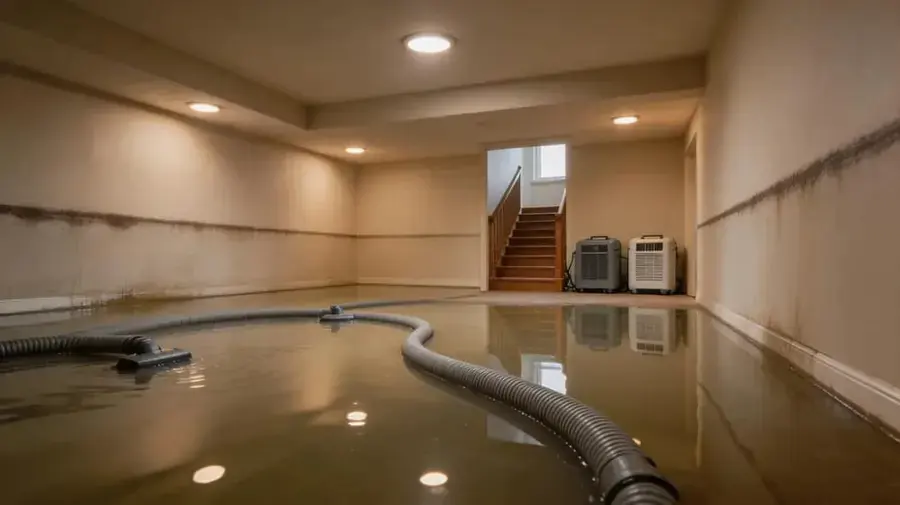
How basement flooding cleanup is handled in Rochester, MN
- 01
Walkthrough
The tech who does the walkthrough maps every wet material with pinless meters and thermal imaging and sets the category and class of the loss.
- 02
Extraction
The extraction crew pulls standing water with truck-mounted units, lifts saturated pad and cuts only what the readings say is lost.
- 03
Drying
The drying team sizes air movers and LGR dehumidifiers to each room's evaporation load and logs psychrometric readings every day.
- 04
Verification
Equipment leaves when wet materials read within 2 to 4 points of a dry reference, which is the IICRC S500 goal, and the file is closed with photos and logs.
What does basement flooding cleanup cost in Rochester, MN?
In Rochester, MN, basement flooding cleanup typically runs $2,500 to $9,000, depending on the water category, how much of the lower level is wet and how much pad and drywall must come out.
- Concrete floor or a small carpeted room
- Extraction and drying
- Little material removal
- Carpet pad removed
- Flood cuts where walls are wet
- Five or more days of drying
- Category 3 containment
- All wet porous materials removed
- Antimicrobial and HEPA air scrubbing
What moves the number: water category, square footage, how high the water wicked, wall and floor materials and how fast drying started. For a closer planning range, try the water damage cost calculator. These are typical ranges, not quotes.
What to do when the basement floods
- 1
Stay off the stairs if power is on. Standing water near outlets or the furnace is an electrical hazard.
- 2
Find the source. Sump, drain, wall or a pipe; stop it if you safely can.
- 3
Save the small stuff. Photos, documents and electronics go upstairs first.
- 4
Photograph and call. Pictures before anything moves help the insurance file.
Most Rochester homes have a basement, and most of those basements are finished: carpet over pad, drywall to the floor, a bedroom or a family room. When water gets in from a pump, a pipe, the floor drain or the walls, it spreads under the carpet and wicks up the drywall faster than most homeowners expect.
Where the water comes from
The source decides the category and the plan, so the walkthrough starts there.
- Sump pump failures and power cuts during summer storms (see sump pump failure cleanup).
- Snowmelt seepage through block walls and the cove joint in March and April.
- Floor-drain sewer backups in older homes, which are Category 3.
- Water heaters, washer hoses and supply lines in the utility room.
How a flooded basement is dried
The extraction crew pulls standing water with truck-mounted units and lifts the pad, which almost never dries in place. The tech who does the walkthrough maps the walls with pinless meters; where water has climbed the drywall, a flood cut a foot or two above the wet line opens the cavity so air can reach the bottom plate and the insulation. Air movers and LGR dehumidifiers go in sized to the room, and readings are logged daily until the materials match a dry reference.
Concrete block walls and slabs hold water much longer than drywall. In older Rochester basements the drying team often adds a desiccant dehumidifier for these dense Class 4 materials so the walls stop feeding moisture back into the room.
Rochester basements by age
Homes on Pill Hill and in Kutzky Park often have stone or block foundations and partial finishing, while 1960s and 1970s ranches in Elton Hills and Meadow Park usually have a finished room over a slab with a floor drain. Newer homes around Cascade Lake and Bamber Valley add big open lower levels and walkout doors. Each one dries differently, and the drying plan reflects that.
If the water came from outside, the FEMA flood insurance page explains how flood coverage differs from a standard homeowners policy, and the National Weather Service flood safety page covers staying safe while water is still rising.
Water across the lower level right now?
(888) 432-4933Rochester water removal, 24/7Related water damage services in Rochester
Basement Flooding Cleanup across Rochester
The restoration team works all of Rochester, from Pill Hill and Kutzky Park to Northrop, Cascade Lake and Eastwood, plus Byron, Stewartville, Kasson, Pine Island and Oronoco.
Every neighborhood and ZIP coveredBasement Flooding Cleanup questions in Rochester, MN
Straight answers on basement flooding cleanup in Rochester homes and buildings.
(888) 432-4933Water still moving? Call Rochester now.Can a finished basement be dried without tearing it all out?
Often. Pad usually goes, but drywall wet with clean water and caught early can be dried with a controlled flood cut or small access holes instead of full removal. Meters, not guesses, decide.
Why does the carpet pad have to go?
Pad holds water like a sponge and is cheap to replace. Drying it in place takes longer than replacing it and risks odor and growth under the carpet.
Is basement flooding covered by insurance?
Water from a burst pipe or a failed appliance is usually covered. Groundwater seepage and outside flooding often are not, and sewer backup is usually a separate endorsement. Coverage depends on your policy, so it is worth checking with your own insurer.
How long does a basement take to dry?
Usually three to five days for drywall and carpet areas, longer when block walls, a slab or hardwood stairs are wet. Equipment comes out on readings, not on a date.
Should the furnace and water heater be checked?
Yes, if water reached them. A heating contractor or plumber should look at any gas appliance that sat in water before it is used again.
Does the basement need to be empty?
No. The crew moves furniture and blocks it up on pads, but clearing small items and valuables first speeds everything up.
Flooded basement in Rochester? Call now.
The restoration team pumps out, opens only what is wet and dries the lower level to a measured goal.