Ceiling Leak Water Damage in Rochester, MN
A ceiling that stains, bulges or drips means water is sitting above it. The restoration team finds the wet area, drains it safely and dries the cavity so the ceiling and framing are not lost.
(888) 432-4933Ceiling dripping? Call Rochester dispatch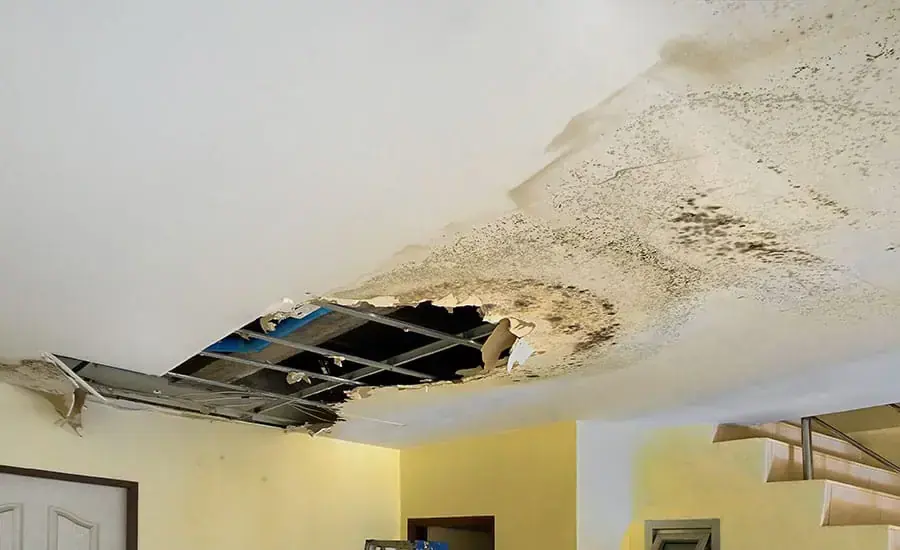
How ceiling leak water damage cleanup is handled in Rochester, MN
- 01
Walkthrough
The tech who does the walkthrough maps every wet material with pinless meters and thermal imaging and sets the category and class of the loss.
- 02
Extraction
The extraction crew pulls standing water with truck-mounted units, lifts saturated pad and cuts only what the readings say is lost.
- 03
Drying
The drying team sizes air movers and LGR dehumidifiers to each room's evaporation load and logs psychrometric readings every day.
- 04
Verification
Equipment leaves when wet materials read within 2 to 4 points of a dry reference, which is the IICRC S500 goal, and the file is closed with photos and logs.
What does ceiling leak water damage cleanup cost in Rochester, MN?
In Rochester, MN, ceiling leak water damage cleanup typically runs $900 to $5,500, depending on the size of the wet area, whether the ceiling is drywall or plaster and how much insulation must come out.
- Moisture mapping
- Small access holes
- A few drying days
- Controlled drainage
- Ceiling section removed
- Insulation and joist drying
- Plaster and lath
- Two levels affected
- Longer drying
What moves the number: the size of the wet area, drywall versus plaster, insulation removal, the water category and how fast drying started. For a closer planning range, try the water damage cost calculator. These are typical ranges, not quotes.
What to do when the ceiling starts to drip
- 1
Stop the fixture. Shut the toilet, washer or sink valve upstairs, or the main.
- 2
Kill the light circuit. Wet fixtures below are a shock hazard.
- 3
Stay out from under it. A bulging ceiling can come down without warning.
- 4
Call for help. Controlled drainage and drying save more of the ceiling.
A ceiling leak is an interior problem: water from a bathroom, a laundry room, a refrigerator line or a supply pipe in the floor above. That makes it different from an ice dam leak, which comes through the roof. Water from above spreads across the top of the drywall, soaks the insulation and the joists, and only shows as a stain once the drywall is saturated.
Common sources in Rochester homes
- Failed wax rings and supply lines on upstairs toilets.
- Shower pans and tub surrounds with cracked grout or failed caulk.
- Second-floor laundry rooms in newer homes, where washer hoses fail.
- Supply lines inside the floor system, including old galvanized pipe.
How a ceiling leak is handled
Safety comes first: a bulging ceiling can hold a lot of water and can come down. The response team drains trapped water through a controlled hole at the low point, then maps the wet area from above and below with thermal imaging and meters. The wet section of ceiling is opened only as far as the readings require, wet insulation comes out, and air movers and LGR dehumidifiers dry the joists and subfloor from below.
Light fixtures and ceiling fans in a wet ceiling are a shock hazard. Turn that circuit off at the panel and do not use the fixture until an electrician checks it.
Drywall versus plaster
Homes near downtown built before the 1950s often have plaster and lath ceilings, which hold water longer and can lose their grip on the lath when wet. Drywall ceilings in newer homes dry faster but sag sooner. The drying plan and the decision about what to remove depend on which one is overhead.
The Consumer Product Safety Commission tracks recalls on appliance hoses and fixtures that cause leaks, and the EPA mold page explains why a wet ceiling cavity needs to dry within 24 to 48 hours.
Water coming through a Rochester ceiling?
(888) 432-4933Rochester water removal, 24/7Related water damage services in Rochester
Ceiling Leak Water Damage across Rochester
The restoration team works all of Rochester, from Pill Hill and Kutzky Park to Northrop, Cascade Lake and Eastwood, plus Byron, Stewartville, Kasson, Pine Island and Oronoco.
Every neighborhood and ZIP coveredCeiling Leak Water Damage questions in Rochester, MN
Straight answers on ceiling leak water damage cleanup in Rochester homes and buildings.
(888) 432-4933Water still moving? Call Rochester now.Should I poke a hole in a bulging ceiling?
Only if it is safe to stand clear: a small hole at the lowest point, with a bucket underneath, drains trapped water in a controlled way. If the ceiling is sagging badly, stay out from under it.
Can a water-stained ceiling be dried instead of replaced?
Often, if the drywall is still firm and drying starts early. Stains can be sealed and painted after the cavity is dry.
How is the source found?
Thermal imaging and meters from above and below, plus a check of the fixtures upstairs. A plumber repairs the source itself.
Is ceiling leak damage covered by insurance?
Sudden leaks are usually covered; slow leaks that went on for months often are not. Coverage depends on your policy, so it is worth checking with your own insurer.
Why does wet insulation have to come out?
It stays wet for a long time, weighs down the ceiling and holds moisture against the framing.
How long does a ceiling take to dry?
Usually three to five days with airflow into the cavity; plaster ceilings take longer.
Ceiling leak in Rochester? Call now.
The response team drains, maps and dries the ceiling cavity before it comes down.